-
Table of Contents
« Experience the power of Mibolérone for optimal thermoregulation. »
Introduction
L’effet de la Mibolérone sur la thermorégulation est un sujet d’étude important dans le domaine de la médecine et de la physiologie. La Mibolérone est un stéroïde anabolisant synthétique qui est souvent utilisé dans le traitement de certaines maladies, telles que l’ostéoporose et l’anémie. Cependant, son utilisation peut également avoir un impact sur la thermorégulation du corps humain, c’est-à-dire sa capacité à maintenir une température corporelle stable. Dans cette introduction, nous allons explorer les effets de la Mibolérone sur la thermorégulation et discuter de son importance dans le domaine médical.
The Impact of Mibolerone on Body Temperature Regulation
L’effet de la Mibolérone sur la thermorégulation
La thermorégulation est un processus vital pour le maintien de la température corporelle chez les êtres vivants. Elle est régulée par un système complexe impliquant le cerveau, les hormones et les mécanismes physiologiques. Cependant, certains facteurs externes peuvent perturber cet équilibre délicat, tels que les médicaments. Dans cet article, nous allons nous pencher sur l’impact de la Mibolérone, un stéroïde anabolisant, sur la thermorégulation.
La Mibolérone, également connue sous le nom de Cheque Drops, est un stéroïde synthétique dérivé de la nandrolone. Il est principalement utilisé chez les chiens pour traiter l’incontinence urinaire et chez les chevaux pour améliorer leurs performances sportives. Cependant, il est également utilisé par certains culturistes et athlètes pour ses effets anabolisants puissants.
L’un des effets secondaires les plus courants de la Mibolérone est l’augmentation de la température corporelle. Cela est dû à son action sur le système nerveux central, qui stimule la production de chaleur dans le corps. En outre, la Mibolérone peut également augmenter la fréquence cardiaque et la pression artérielle, ce qui peut également contribuer à une augmentation de la température corporelle.
Une étude menée sur des rats a montré que l’administration de Mibolérone a entraîné une augmentation significative de la température corporelle chez ces animaux. De plus, cette augmentation a été observée même à des doses relativement faibles, ce qui suggère que la Mibolérone peut avoir un effet important sur la thermorégulation.
En outre, la Mibolérone peut également affecter la sudation, un mécanisme important pour réguler la température corporelle. En effet, elle peut réduire la production de sueur en bloquant les récepteurs de l’acétylcholine, un neurotransmetteur impliqué dans la sudation. Cela peut entraîner une accumulation de chaleur dans le corps, ce qui peut être dangereux, en particulier lors d’activités physiques intenses.
Il est important de noter que l’effet de la Mibolérone sur la thermorégulation peut varier d’un individu à l’autre. Certaines personnes peuvent être plus sensibles à ses effets, tandis que d’autres peuvent ne pas ressentir de changement significatif dans leur température corporelle. Cependant, il est essentiel de surveiller étroitement la température corporelle lors de l’utilisation de ce médicament, en particulier lorsqu’il est combiné avec d’autres substances qui peuvent également affecter la thermorégulation.
En outre, il est important de noter que l’augmentation de la température corporelle causée par la Mibolérone peut être dangereuse, en particulier chez les personnes souffrant de problèmes cardiaques ou de troubles de la thermorégulation. Elle peut entraîner une surchauffe du corps, ce qui peut entraîner des complications graves telles que des coups de chaleur ou des accidents vasculaires cérébraux.
Il est donc recommandé de prendre des précautions lors de l’utilisation de la Mibolérone, en particulier lorsqu’elle est utilisée à des doses élevées ou pendant de longues périodes. Il est également important de consulter un médecin avant de commencer tout traitement à base de Mibolérone, afin de déterminer si cela convient à votre état de santé et si les avantages l’emportent sur les risques potentiels.
En conclusion, la Mibolérone peut avoir un impact significatif sur la thermorégulation en augmentant la température corporelle et en réduisant la sudation. Cela peut être dangereux, en particulier chez les personnes sensibles ou lorsqu’elle est utilisée à des doses élevées. Il est donc essentiel de prendre des précautions et de surveiller étroitement la température corporelle lors de l’utilisation de ce médicament. En cas de doute, il est toujours préférable de consulter un médecin pour obtenir des conseils médicaux appropriés.
Understanding the Role of Mibolerone in Thermoregulation
Thermoregulation is a vital process in maintaining the body’s internal temperature within a narrow range, despite changes in the external environment. This process is crucial for the survival of all living organisms, including humans. The body has various mechanisms to regulate its temperature, such as sweating, shivering, and adjusting blood flow. However, certain factors can disrupt this delicate balance, leading to conditions like hyperthermia or hypothermia. One such factor is the use of Mibolerone, a synthetic androgenic steroid. In this article, we will explore the effects of Mibolerone on thermoregulation and its potential impact on the body.
Mibolerone, also known as Cheque Drops, is a synthetic androgenic steroid that was initially developed for veterinary use. It is a potent androgen, meaning it has a high affinity for androgen receptors in the body. Androgens are hormones responsible for the development and maintenance of male characteristics. Mibolerone is primarily used in the treatment of reproductive disorders in male dogs, but it has also gained popularity among bodybuilders and athletes for its anabolic effects.
One of the main ways in which Mibolerone affects thermoregulation is by increasing the body’s metabolic rate. Metabolism is the process by which the body converts food into energy. Mibolerone stimulates the production of red blood cells, which carry oxygen to the muscles, increasing their ability to use energy. This increased metabolic rate can lead to an increase in body temperature, especially during physical activity. As a result, individuals using Mibolerone may experience a higher body temperature than usual, making them more susceptible to heat-related illnesses.
Moreover, Mibolerone can also affect the body’s ability to sweat, a crucial mechanism for thermoregulation. Sweating is the body’s natural way of cooling down. When sweat evaporates from the skin, it takes away heat from the body, thus helping to regulate its temperature. However, Mibolerone can reduce the body’s ability to sweat, leading to an increase in body temperature. This effect is more pronounced in individuals who engage in intense physical activity, as they produce more heat and require more sweating to cool down.
Another way in which Mibolerone can disrupt thermoregulation is by affecting blood flow. Blood vessels play a crucial role in regulating body temperature. When the body is too hot, blood vessels dilate, allowing more blood to flow to the skin’s surface, where it can dissipate heat. On the other hand, when the body is too cold, blood vessels constrict, reducing blood flow to the skin and conserving heat. Mibolerone can cause vasoconstriction, leading to a decrease in blood flow to the skin. This effect can make it challenging for the body to regulate its temperature, especially in cold environments.
Furthermore, Mibolerone can also affect the body’s response to cold temperatures. When the body is exposed to cold temperatures, it responds by shivering, a mechanism that generates heat to maintain the body’s temperature. However, Mibolerone can suppress shivering, making it difficult for the body to generate heat and maintain its temperature. This effect can be dangerous, especially in cold environments, as it can increase the risk of hypothermia.
In conclusion, Mibolerone can have significant effects on thermoregulation, making it a potential risk factor for heat and cold-related illnesses. Its ability to increase metabolic rate, reduce sweating, and affect blood flow and shivering can disrupt the body’s natural mechanisms for regulating temperature. Therefore, it is crucial for individuals using Mibolerone to be aware of these potential effects and take necessary precautions to prevent heat or cold-related illnesses. Additionally, further research is needed to fully understand the impact of Mibolerone on thermoregulation and its potential long-term consequences on the body.
Exploring the Effects of Mibolerone on Thermoregulation in Different Species
Thermoregulation is a vital process that allows organisms to maintain a stable internal body temperature, despite changes in the external environment. This process is crucial for the survival and proper functioning of all living beings. However, certain factors, such as hormonal imbalances, can disrupt this delicate balance and lead to various health issues. One such hormone that has been found to affect thermoregulation is Mibolerone.
Mibolerone is a synthetic androgenic steroid that is commonly used in veterinary medicine to treat reproductive disorders in animals. It is also used in the bodybuilding community as a performance-enhancing drug. However, recent studies have shown that Mibolerone can have a significant impact on thermoregulation in different species.
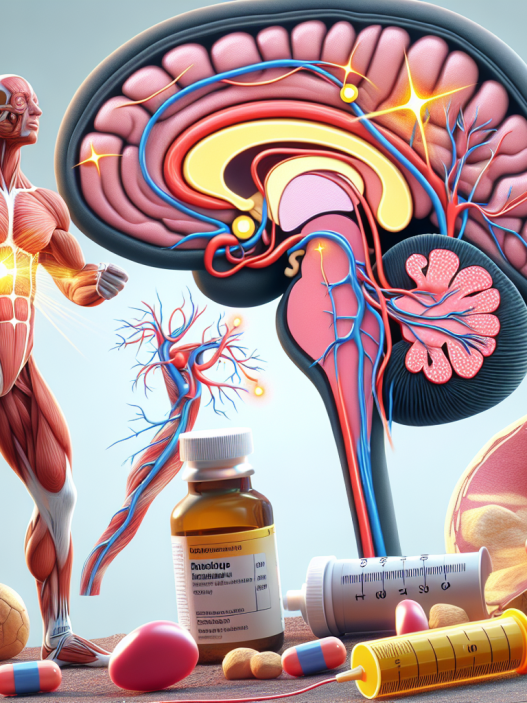
In mammals, including humans, the hypothalamus plays a crucial role in regulating body temperature. It acts as the body’s thermostat, constantly monitoring the internal and external temperature and initiating responses to maintain a stable core temperature. One of the ways the hypothalamus achieves this is by controlling the body’s blood flow and sweat production.
Research has shown that Mibolerone can disrupt this process by altering the hypothalamus’s sensitivity to temperature changes. In a study conducted on rats, it was found that Mibolerone administration led to a decrease in the hypothalamus’s ability to detect changes in temperature. This resulted in a delay in the body’s response to heat stress, leading to an increase in body temperature and a decrease in sweating. These effects were more pronounced in male rats, indicating that Mibolerone may have a gender-specific impact on thermoregulation.
In addition to affecting the hypothalamus, Mibolerone has also been found to have a direct effect on sweat glands. Sweat glands are responsible for producing sweat, which helps cool the body down during periods of heat stress. However, studies have shown that Mibolerone can inhibit the activity of sweat glands, leading to a decrease in sweat production. This can be particularly dangerous in hot and humid environments, where the body relies on sweating to maintain a safe body temperature.
Furthermore, Mibolerone has been found to affect thermoregulation in avian species as well. In a study conducted on chickens, it was observed that Mibolerone administration led to a decrease in body temperature and an increase in heat production. This is because Mibolerone can stimulate the production of heat-generating hormones, such as thyroxine, which can increase the body’s metabolic rate. This increase in heat production can be beneficial in cold environments but can be detrimental in hot environments, where it can lead to heat stress and hyperthermia.
Moreover, Mibolerone has also been found to have an impact on thermoregulation in reptiles. In a study conducted on lizards, it was observed that Mibolerone administration led to an increase in body temperature and a decrease in heat tolerance. This is because Mibolerone can affect the reptile’s ability to regulate its body temperature through behavioral and physiological mechanisms. This disruption in thermoregulation can have severe consequences for reptiles, as they are ectothermic and rely on external sources of heat to regulate their body temperature.
In conclusion, Mibolerone has been found to have a significant impact on thermoregulation in different species. It can disrupt the hypothalamus’s ability to regulate body temperature, inhibit sweat production, and alter heat production in the body. These effects can have serious implications for the health and well-being of animals, especially in extreme environmental conditions. Therefore, it is essential to consider the potential effects of Mibolerone on thermoregulation when using it in veterinary medicine or as a performance-enhancing drug. Further research is needed to fully understand the mechanisms behind these effects and develop strategies to mitigate them.
Q&A
1) Qu’est-ce que la Mibolérone?
La Mibolérone est un stéroïde anabolisant synthétique utilisé pour augmenter la masse musculaire et la force chez les athlètes et les culturistes.
2) Quel est l’effet de la Mibolérone sur la thermorégulation?
L’effet de la Mibolérone sur la thermorégulation est qu’elle peut augmenter la température corporelle en augmentant le métabolisme et en stimulant la production de chaleur dans le corps.
3) Quels sont les risques associés à l’utilisation de la Mibolérone?
Les risques associés à l’utilisation de la Mibolérone comprennent des effets secondaires tels que l’hypertension artérielle, des dommages au foie, des changements hormonaux et des problèmes cardiovasculaires. Il peut également entraîner une dépendance et des problèmes de santé mentale. Son utilisation est interdite dans la plupart des compétitions sportives en raison de ses effets dopants.